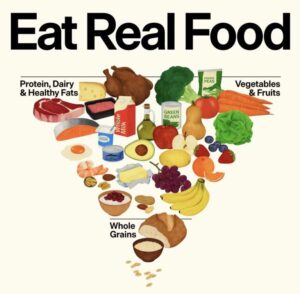
For decades, government nutrition guidance has shaped how Americans think about food: what to eat more of, what to limit, and how to build healthier meals. Today’s guidance – to “put real food back at the center of health” – looks very different than the “food pyramid” many of us grew up with, and that shift matters.
The modern approach, reflected in tools like MyPlate from the U.S. Department of Agriculture, emphasizes freshness, balance, minimal processing, and nutrient density. And that evolution strongly favors one thing: foods that are close to fresh, safe, and cleanly labeled.
That’s where high pressure processing (HPP) comes in.
From Shelf-Stable to Fresh-Focused: A Meaningful Shift
The original food pyramid focused heavily on food groups and portions. Today’s guidance focuses on real foods:
- Fruits and vegetables as the foundation
- High-quality proteins
- Dairy and dairy alternatives
- Whole foods over heavily preserved or ultra-processed options
Just as importantly, there’s growing emphasis on:
- Fewer artificial preservatives
- Less sodium and added sugar
- Shorter, more recognizable ingredient lists
Consumers are being encouraged to eat foods that look, taste, and nourish more like they came from a kitchen – not a lab.
Where HPP Fits Perfectly
High pressure processing directly supports the intent behind modern nutrition guidance by enabling foods that are:
Fresh & Nutrient-Dense
HPP uses cold pressure – not heat – to make food safe. That means:
- Vitamins, minerals, and fresh flavors are preserved
- Texture and color remain closer to fresh-made products
This is especially important for fruits, vegetables, refrigerated beverages, dips, wet salads, proteins, and dairy – exactly the categories emphasized in today’s dietary guidance.
Clean Label by Design
HPP allows brands to achieve food safety and shelf-life extension without relying on artificial preservatives. That supports:
- Short ingredient lists
- Fewer “chemical-sounding” additives
- Labels consumers can understand and trust
Convenient, but Not Compromised
Government guidance recognizes that convenience matters, but not at the expense of nutrition. HPP enables:
- Ready-to-eat and ready-to-use foods
- Refrigerated products that fit real life
- Safety without sacrificing quality
This bridges the gap between how people want to eat and how they actually shop.
A Big Win for the Refrigerated Food Industry
As nutrition guidance continues to push toward fresh, balanced meals, we expect continued growth in:
- Refrigerated prepared foods
- Fresh dips, spreads, and wet salads
- Cold-pressed and fresh beverages
- Clean-label proteins and dairy
HPP is not just compatible with this direction – it enables it at scale.
For food brands, retailers, and foodservice operators, that means the ability to:
- Align with government-backed nutrition guidance
- Meet rising consumer expectations
- Deliver safe, high-quality foods without compromise
The Bigger Picture: Food Safety + Nutrition Can Coexist
Perhaps most importantly, modern dietary guidance doesn’t treat nutrition and safety as tradeoffs. HPP reinforces that we don’t have to choose.
We can have:
- Fresh foods
- Clean labels
- Longer refrigerated shelf life
- And validated food safety
That’s not just a win for HPP, it’s a win for the entire food system.
Closing Thought
As nutrition guidance continues to emphasize fresh, balanced, and minimally processed foods, high pressure processing is proving to be one of the most effective tools for turning those ideals into reality.
Learn more about the updated U.S. Nutrition Policy here.
